Croatia is the cruising ground people recommend to friends who are nervous about chartering.
There is a reason for that. More than a thousand islands sit close enough together that you are seldom more than an hour from shelter; the water is clear and deep; and the sailing is protected rather than exposed. A week here does not require anyone in the party to be brave.
It is also, quietly, one of the more interesting coastlines in Europe — a Venetian shoreline that spent four centuries facing the Ottoman Empire, with the walls to prove it.
Split and the near islands
Split is the usual base: an airport, a working city, and Diocletian's palace with a town built inside it rather than beside it.
From there the first hops are short. Brač for Zlatni Rat, the shingle spit that changes shape with the current. Šolta for the quiet. Then Hvar, which is the island everybody has heard of and deserves it — a Venetian square, a hilltop fortress and the Pakleni archipelago scattered immediately offshore with a dozen anchorages inside a tender ride.
Vis and the Blue Cave
Vis was a Yugoslav military base and closed to foreigners until 1989, which is exactly why it is the least developed of the major islands and the best eating on this coast.
Off its western neighbour Biševo is the Blue Cave, where late-morning light entering underwater turns the whole chamber luminous. Entry is by small boat and the queue builds — this is a mid-morning stop or not one at all.
Korčula and the run south
Korčula's old town is a fishbone of streets laid out to break the wind, which is the sort of detail that tells you the place was designed by people who lived there rather than visited.
Ask about a peka — meat or octopus cooked slowly under an iron bell buried in embers. It has to be ordered hours ahead, which is the point.
Dubrovnik, and then south again
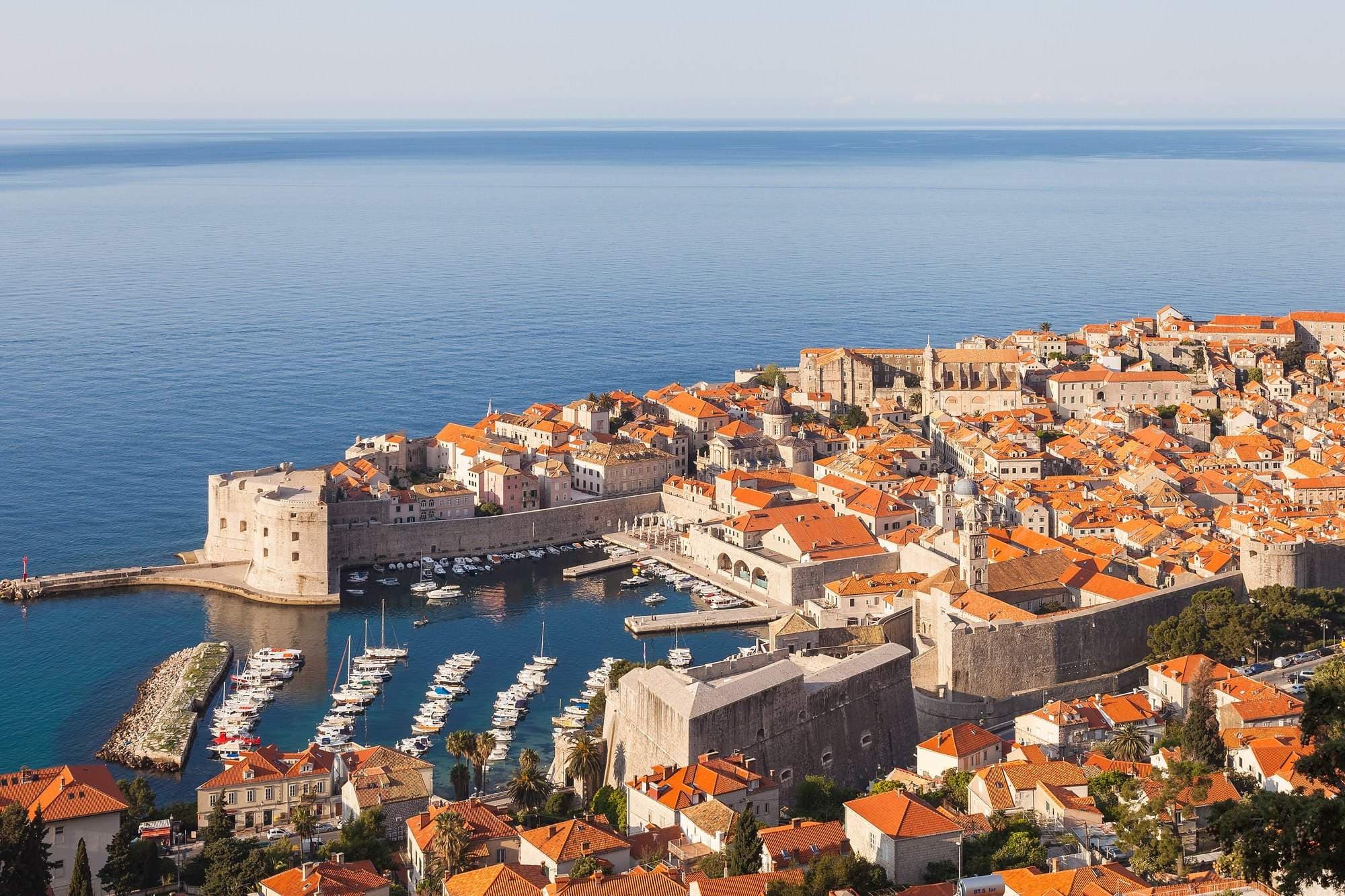
Dubrovnik is the obvious end of the week, and it is worth arriving by sea for the same reason Capri is: you are not on the coach timetable. Walk the two kilometres of intact wall at opening or an hour before sunset, and use the Elaphiti islands offshore for the swimming.
If the week allows another day, cross into Montenegro. The Bay of Kotor cuts twenty-eight kilometres inland between mountains rising 1,700 metres — a drowned river canyon, not a fjord, though nobody local will correct you. Sail it slowly. It is the most dramatic approach in the Adriatic and the reason to add the extra day.
Where it stops being easy
- The bura is a cold, violent wind falling off the mountains, most common outside high summer. It arrives fast. This is what your captain is watching.
- Crossing into Montenegro means clearing customs both ways. It is routine, but it costs half a morning — build it in.
- July and August are genuinely busy on Hvar and in Dubrovnik. June and September are the same coast with a third of the boats.
- Berths in Dubrovnik's ACI marina and on Hvar's town quay are spoken for well ahead in season.
A coastline built for this
Most cruising grounds ask you to choose between scenery, shelter and somewhere to eat. Dalmatia is unusual in rarely making you pick.
That is why it suits first-time charterers and why experienced ones keep going back — the week is easy, and the islands are still interesting on the fourth visit.
Tell us your dates and who is coming, and we will lay out a route that fits the party rather than the brochure.